
Zinc: The Essential Mineral Your Body Can’t Thrive Without
Many people don’t realise how important zinc is for feeling your best — and as a nutritionist in London, I see firsthand how often this vital mineral is overlooked. From supporting a strong immune system to promoting clear skin and balanced hormones, zinc quietly plays a powerful role in overall health and daily wellbeing.
Why Zinc Matters
Zinc is involved in hundreds of processes in the body. It helps with:
- Immune system support
- Skin repair and inflammation control
- Hormone production, including thyroid and reproductive hormones
- Maintaining a healthy gut lining
- Protecting cells from oxidative stress
Unlike some nutrients, zinc isn’t stored in the body, so it needs to be replenished regularly through diet.
Signs You Might Be Low in Zinc
Deficiency can creep up quietly. Watch out for:
- Frequent colds or infections
- Acne, eczema, or other skin issues
- Slow wound healing
- Feeling foggy or low in mood
- Hair thinning or white spots on nails
- Hormonal changes, like irregular cycles
Best Foods for Zinc
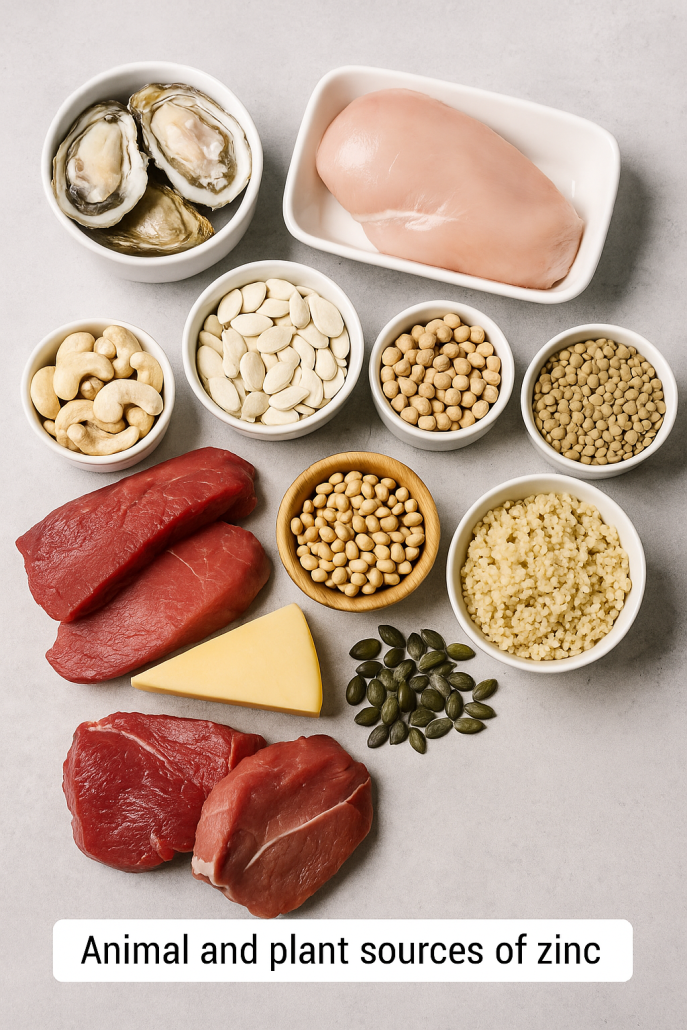
Zinc comes from both animal and plant foods, though your body absorbs it more easily from animal sources.
Animal Sources
- Oysters
- Beef and lamb
- Chicken
- Eggs
- Cheese and other dairy
Plant Sources
- Pumpkin seeds
- Chickpeas
- Cashews
- Lentils
- Quinoa
Tips for Plant-Based Eaters
- Soak or sprout legumes and seeds: This reduces compounds that block zinc absorption.
- Include a variety of sources: Combining beans, seeds, nuts, and whole grains helps ensure adequate zinc intake.
- Pair with vitamin C foods: Eating fruits and vegetables with meals can enhance mineral absorption.
- Consider fortified foods: Some plant milks and cereals are enriched with zinc.
Zinc for Immunity and Hormones
Zinc is one of the most studied minerals for keeping your immune system in top shape. It helps white blood cells do their job and can even reduce the length of colds.
Hormonal balance also relies on zinc—especially for thyroid health, fertility, and energy levels. Signs like fatigue, weight changes, or irregular cycles can sometimes be linked to low zinc.
Supplementing Zinc Safely
Eating zinc-rich foods is ideal, but supplements can help if intake is low or absorption is an issue. Factors to consider include:
- Gut health
- Overall diet quality
- Medication use (like antacids)
- Lab tests or health markers
Takeaway
Even though zinc is only needed in small amounts, it has a big impact on immunity, skin, and hormone health. Paying attention to your diet and considering supplements when necessary can help prevent hidden deficiencies and keep you feeling your best.
Disclaimer
This content is for educational purposes only and isn’t a substitute for personalised advice from a healthcare professional. Always check with a qualified provider before starting any supplements.
Working with a Nutritionist
Book an appointment today if you feel like you need more assistance or direction to reach your goals.
Online consultation with a Nutritionist is available for clients who live outside the London area or who are unable to come to my London office. You can enjoy the online consultation from the comfort of your home or office and you will be given the same level of personal attention and care that you would experience coming to see the Nutritionist in person.
Please note, the links provided are Amazon affiliate links. If you buy something using these links, I will receive a small commission, at no additional cost to you. Rest assured that all products recommended have been personally used and endorsed by myself.


Leave a Reply
Want to join the discussion?Feel free to contribute!