
Private Nutritionist in London vs NHS Dietitian: What’s the Difference?
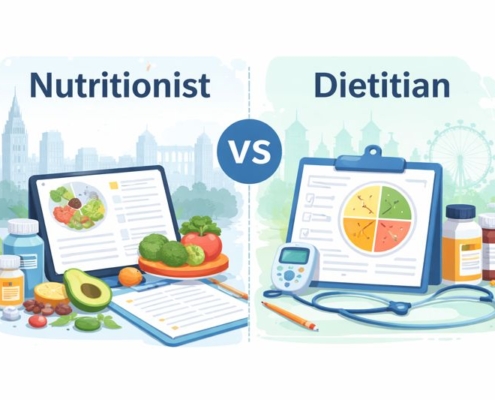
This distinction matters because it affects how quickly you can access care, how personalised your support will be, and whether nutrition is used as part of medical treatment or long-term health optimisation. Many people searching for a Nutritionist in London are not acutely ill yet experience symptoms that significantly affect daily life, confidence, and wellbeing.
If you want to learn more about what nutritionists actually do, see What a Nutritionist Does, which explains the practical support provided in private practice.
If you are specifically weighing up your options in the capital, you may also find it helpful to read this detailed guide on choosing between a nutritionist and a dietitian in London.
Nutritionist vs Dietitian in the UK: Why This Question Comes Up So Often
This is one of the most common questions people ask when seeking nutrition support in the UK. The confusion is understandable because both professions work with food, health, and behaviour, and both use evidence-based principles.
In reality, most people are not choosing between two equivalent services. They are choosing between two different models of care — one designed to manage illness safely within a public healthcare system, and another designed to support individuals within the complexity of daily life.
This mismatch in expectations is often what leads people to feel “dismissed,” “rushed,” or unsure where to turn next.
Private Nutritionist vs NHS Dietitian: Quick Comparison
NHS dietitians focus on treating diagnosed medical conditions.
Private nutritionists focus on improving health, symptoms, and lifestyle patterns.
- Access: NHS care usually requires referral; private care is self-referred
- Waiting times: NHS services may involve delays; private care is faster
- Consultation depth: NHS appointments are shorter; private consultations are more comprehensive
- Primary aim: NHS treats disease; private care supports prevention and quality of life
Regulation, Registration, and What This Actually Means
Dietitians are regulated by law through the Health and Care Professions Council (HCPC). This means their title is protected, and they work within strict clinical governance frameworks.
Nutritionists are not statutorily regulated in the same way, but reputable practitioners are registered with professional bodies and work within defined ethical and scientific standards.
In practical terms, regulation determines scope of responsibility, not quality of care. One system prioritises safety in medical treatment; the other prioritises flexibility and individualisation.
What Is an NHS Dietitian?
An NHS dietitian is a regulated healthcare professional who delivers medical nutrition therapy. They work within hospitals, GP practices, and specialist clinics.
NHS dietitians are essential when nutrition directly affects medical safety, such as:
- Diabetes management and insulin coordination
- Renal disease requiring strict electrolyte control
- Gastrointestinal disease flare management
- Malnutrition and clinical feeding support
In these contexts, nutrition is a clinical intervention rather than a lifestyle tool.
What Is a Private Nutritionist?
A private nutritionist focuses on how nutrition fits into real life. This includes work schedules, stress levels, sleep quality, emotional eating patterns, and long-term habits.
Private nutrition often helps people who:
- Feel stuck between “not ill” and “not well”
- Have multiple overlapping symptoms
- Want clarity rather than conflicting advice
- Are tired of short-term fixes
This may include education around gut health, supplementation, and digestion — for example, understanding how to choose the right probiotic when appropriate.
Nutritionists also help clients bridge the gap between “eating healthy” and “eating for their body’s unique needs,” as explained in Eating Healthy vs Eating for Your Body, which compares generic guidance with personalised nutrient strategies.
Access and Referral Pathways
NHS Dietitian Referral
NHS access depends on diagnosis, severity, and local availability. Even in London, services are prioritised for clinical necessity rather than symptom burden.
Private Nutritionist Booking
Private nutrition allows direct booking and structured support through nutrition consultations, with continuity over time.
Appointment Length and Depth
Time is one of the most underestimated factors in health outcomes.
Short appointments often focus on “what to eat.” Longer consultations explore why eating patterns are difficult to sustain — how habits, routines, and environment interact with physiology.
This may include addressing misunderstandings such as those explored in discussions about natural versus added sugars.
Why Symptoms Persist Despite “Normal” Test Results
Many people are told their blood tests are “normal” yet still feel unwell.
This happens because standard medical testing is designed to detect disease, not early dysfunction. Nutritionists often work in this grey zone, helping people understand patterns rather than single markers.
Scope of Support: Clinical vs Holistic
Private nutrition is often chosen for areas not well served by hospital-based care, such as:
- Digestive symptoms with a gut health nutritionist
- Hormonal regulation with a hormone health nutritionist
- PCOS-specific guidance from a PCOS nutritionist
- Energy and metabolic support with a thyroid nutritionist
- Menopause support from a menopause nutritionist
Why Advice Alone Rarely Works
Most people already know what “healthy eating” looks like — but they struggle with application. Behaviour change science shows that context, motivation, stress, and identity matter as much as information.
This is where longer-term private support can make a difference: by integrating nutrition insights with real-life patterns.
Preventative vs Reactive Care Models
The NHS excels at treating illness once it is present. Private nutrition often focuses on preventing illness by addressing early patterns and lifestyle factors.
Goal-Focused Nutrition Support
- Fat loss with a weight loss specialist
- Performance and recovery with a sports nutritionist
- Skin health support with a skin nutritionist
- Whole-body support from a holistic nutritionist
Cost, Value, and Long-Term Outcomes
NHS dietitian services are free at the point of access. Private nutrition is an investment in time, clarity, and long-term health literacy.
Can You Work With Both?
Yes. Many people work with an NHS dietitian for medical care and a private nutritionist for lifestyle and behaviour change, sometimes through an online nutritionist.
Frequently Asked Questions
You can also explore a wider range of common questions on the nutrition FAQs page.
Is a private nutritionist the same as an NHS dietitian?
No. NHS dietitians provide medical nutrition therapy, while private nutritionists focus on personalised, preventative care.
Do I need a GP referral?
No referral is required for private nutrition support.
Final Thoughts
The best choice depends on your needs. NHS dietitians are essential for medical nutrition therapy. Private nutritionists support lifestyle change, prevention, and long-term wellbeing.

