
How Many Calories Should I Eat to Lose Weight?
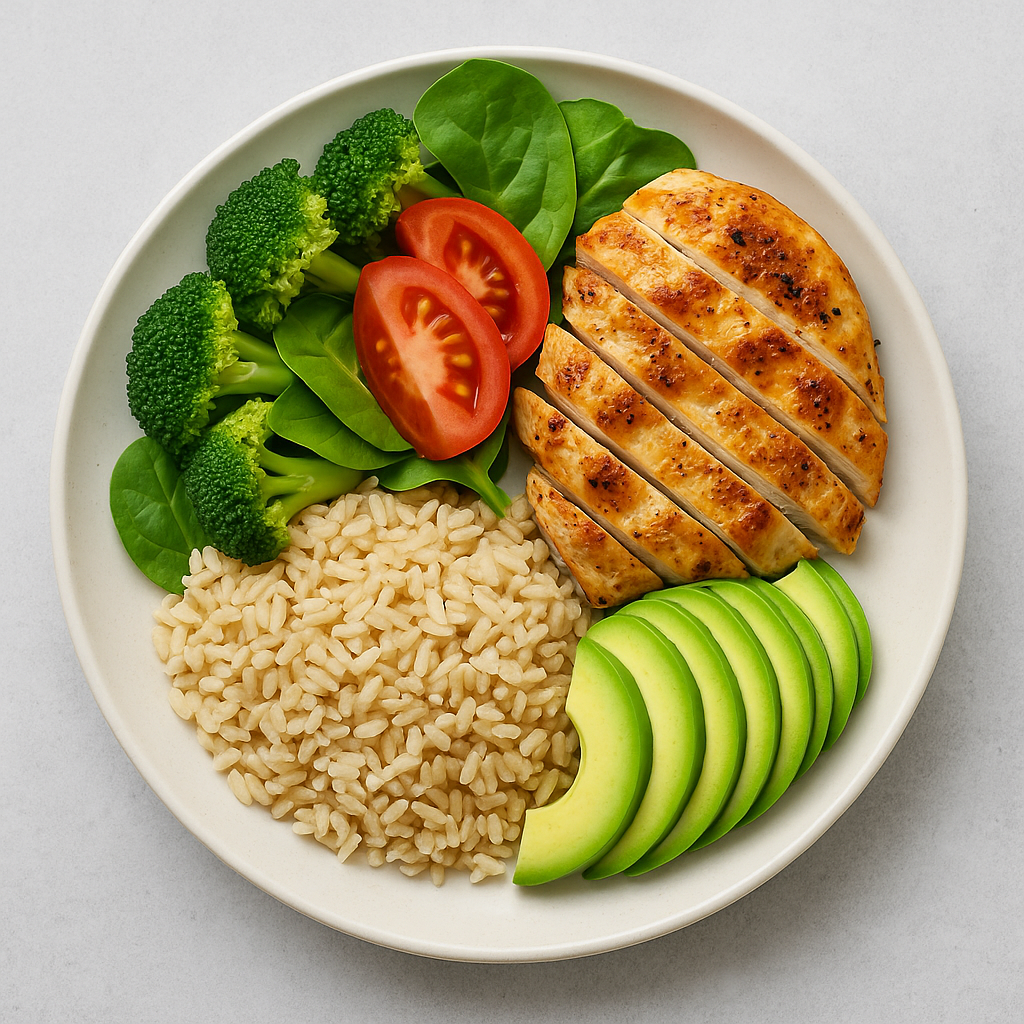
If you’ve ever typed “How many calories should I eat to lose weight?” into Google, you’re not alone — and as a London-based nutritionist, I know this is one of the most common questions people ask when trying to understand how many calories they genuinely need for fat loss. With endless online advice about calorie deficits, TDEE (Total Daily Energy Expenditure), and rapid weight-loss methods, it’s easy to feel overwhelmed or confused by conflicting recommendations. The good news is that you don’t need extreme dieting or severe restriction to lose weight effectively. By calculating your TDEE and creating a realistic, sustainable calorie deficit, you can lose weight while supporting energy levels, muscle maintenance, metabolic health, and long-term results.
Understanding Calories and Energy Balance
Before diving into numbers, it’s essential to understand what calories actually are. A calorie is a unit of energy — specifically, the amount of energy needed to raise the temperature of one gram of water by one degree Celsius. In nutrition, calories represent the energy our bodies get from food and drink to power every process: from thinking and breathing to walking and exercising.
The Principle of Energy Balance
Weight change fundamentally comes down to energy balance — the relationship between calories consumed and calories expended. If you eat more calories than your body burns, you gain weight (a calorie surplus). If you eat fewer calories than your body burns, you lose weight (a calorie deficit).
- Calorie surplus → weight gain
- Calorie maintenance → stable weight
- Calorie deficit → weight loss
Although this seems simple, our metabolism is complex. Hormones, genetics, activity levels, and body composition all influence how efficiently we use energy. That’s why understanding your Total Daily Energy Expenditure is the key to tailoring your plan effectively.
What Is TDEE (Total Daily Energy Expenditure)?
TDEE represents the total number of calories your body burns each day. It includes all energy used for basic bodily functions and physical activity. Knowing your TDEE helps you set a realistic calorie target for weight loss that fits your lifestyle.
The Four Components of TDEE
- BMR (Basal Metabolic Rate): The calories your body needs to maintain vital functions like breathing, heartbeat, and cell repair at rest. It usually accounts for 60–70% of total energy expenditure.
- TEF (Thermic Effect of Food): The energy required to digest, absorb, and metabolise food — around 10% of daily expenditure.
- NEAT (Non-Exercise Activity Thermogenesis): The calories burned through daily movement — walking, cleaning, fidgeting, etc.
- EAT (Exercise Activity Thermogenesis): The energy used during intentional exercise.
Adding these components together gives your TDEE — your personal maintenance calorie level. From there, you can safely reduce calories to create a deficit for weight loss.
Step-by-Step: How to Calculate Your TDEE
Calculating your TDEE doesn’t require expensive equipment or guesswork. A reliable way to estimate it is to start with your BMR and multiply it by an activity factor.
1. Calculate Your Basal Metabolic Rate (BMR)
The Mifflin-St Jeor equation is considered one of the most accurate formulas for estimating BMR:
- For women: BMR = (10 × weight in kg) + (6.25 × height in cm) − (5 × age in years) − 161
- For men: BMR = (10 × weight in kg) + (6.25 × height in cm) − (5 × age in years) + 5
Example: Let’s take a 35-year-old woman who weighs 70 kg and is 165 cm tall:
BMR = (10 × 70) + (6.25 × 165) − (5 × 35) − 161 = 700 + 1031 − 175 − 161 = 1,395 kcal/day.
2. Multiply by an Activity Factor
Next, multiply your BMR by an activity multiplier to estimate your TDEE:
- Sedentary (little or no exercise): × 1.2
- Lightly active (light exercise/sport 1–3 days per week): × 1.375
- Moderately active (moderate exercise/sport 3–5 days per week): × 1.55
- Very active (hard exercise/sport 6–7 days per week): × 1.725
- Extra active (physical job or very intense training): × 1.9
If our example client is moderately active:
TDEE = 1,395 × 1.55 = 2,162 kcal/day.
This is her approximate maintenance level — the number of calories she can eat to maintain her current weight.
Creating a Calorie Deficit for Sustainable Weight Loss
Once you know your TDEE, the next step is to create a calorie deficit that encourages weight loss without harming your metabolism or mood. A 10–20% deficit is generally a safe and sustainable range for most adults.
How to Apply a 10–20% Deficit
Using the previous example (TDEE = 2,162 kcal):
- 10% deficit: 2,162 × 0.9 = 1,946 kcal/day
- 15% deficit: 2,162 × 0.85 = 1,838 kcal/day
- 20% deficit: 2,162 × 0.8 = 1,730 kcal/day
In practice, this range supports gradual, steady fat loss of roughly 0.25–0.75 kg per week — a pace that’s sustainable and helps preserve lean muscle mass. Larger deficits tend to increase hunger, fatigue, and risk of rebound weight gain.
Why “Starving Yourself” Doesn’t Work Long-Term
Severe calorie restriction may produce short-term results, but it often backfires. When calorie intake drops too low, your body perceives it as a threat and adapts by reducing energy expenditure — a process known as adaptive thermogenesis.
This can lead to:
- Slower metabolism
- Increased hunger hormones (ghrelin and neuropeptide Y)
- Decreased satiety hormones (leptin)
- Loss of muscle tissue
- Reduced energy, mood swings, and poor concentration
In my clinical practice, I often see clients who have been “dieting” on 1,200 calories or less for months, yet their progress has plateaued. The solution isn’t to eat even less — it’s to recalibrate metabolism and build sustainable habits.
The Role of Macronutrients in a Calorie Deficit
Calories matter, but so does where they come from. The balance of macronutrients — carbohydrates, protein, and fat — influences hunger, body composition, and energy levels.
Protein: The Foundation for Satiety and Muscle Preservation
Protein has the highest thermic effect (it takes more energy to digest) and helps maintain lean muscle during weight loss. Aim for approximately 1.6–2.2 g of protein per kg of body weight daily, depending on activity level.
Carbohydrates: The Body’s Preferred Fuel
Carbs aren’t the enemy. Whole grains, fruits, and vegetables provide essential fibre and micronutrients. They also support thyroid function and mood regulation — both critical when you’re in a deficit.
Fats: Essential for Hormones and Brain Function
Healthy fats (avocado, olive oil, nuts, oily fish) are vital for hormone health and absorption of fat-soluble vitamins. Around 25–35% of your total calories from fat is usually appropriate.
Micronutrients and Nutrient Density
In a calorie deficit, nutrient density becomes even more important. Choosing foods rich in vitamins, minerals, and fibre supports energy, satiety, and long-term wellbeing.
- Prioritise colourful vegetables and fruits
- Include lean proteins and omega-3 fats
- Choose whole grains over refined ones
- Stay hydrated — mild dehydration can mimic hunger
Think of your daily calories as a “nutrient budget” — every choice counts. A calorie isn’t just a calorie when it comes to health outcomes.
Tracking and Adjusting: How to Stay on Course
Even with accurate calculations, your real-world calorie needs can differ due to genetics, hormonal fluctuations, and lifestyle changes. Treat your initial estimate as a starting point, not a fixed rule.
Step 1: Track Your Intake and Progress
Use a food diary or app for 1–2 weeks to monitor calorie intake and body weight trends. Focus on consistency rather than perfection.
Step 2: Monitor Changes
- If weight is stable → You’re near maintenance (TDEE is accurate).
- If weight decreases by 0.25–0.75 kg per week → You’re in a healthy deficit.
- If weight drops too quickly (>1 kg per week) → Deficit may be too large.
- If weight doesn’t change after 3–4 weeks → Consider a small calorie reduction or increasing activity.
Step 3: Reassess Every 4–6 Weeks
As you lose weight, your TDEE decreases slightly because a smaller body requires less energy. Adjust your intake gradually to match your new energy needs.
The Psychological Side of Eating Less
Creating a calorie deficit can trigger emotional and behavioural challenges. Hunger, cravings, or feelings of deprivation are common, but manageable with the right mindset and strategies.
Tips for Managing Hunger and Cravings
- Eat high-protein, high-fibre meals to stay fuller longer.
- Include a portion of healthy fat with every meal.
- Stay hydrated — thirst can mimic hunger.
- Practise mindful eating: slow down, notice flavours, and check in with your hunger cues.
- Get enough sleep — poor sleep increases hunger hormones.
Remember, your goal isn’t to suppress hunger completely but to manage it intelligently. Consistent moderate hunger is normal in a deficit; excessive hunger is a red flag that you’ve gone too low.
Exercise and Calorie Deficit: A Powerful Partnership
Exercise enhances fat loss, preserves muscle mass, and supports metabolic health. However, it shouldn’t be used solely to “burn off” food. In a well-balanced plan, exercise complements nutrition rather than compensates for it.
Best Exercise Combination for Weight Loss
- Strength training: 2–3 sessions per week to preserve lean mass.
- Cardiovascular activity: 150 minutes per week of moderate intensity (e.g., brisk walking, cycling).
- NEAT movement: Increase steps, take stairs, walk after meals.
This balanced approach boosts total energy expenditure without triggering excessive hunger or fatigue.
Common Mistakes When Calculating Calories
Even with the best intentions, many people misjudge calorie needs. Here are common pitfalls I see in practice:
- Underestimating intake: Forgetting small snacks, oils, and drinks.
- Overestimating activity: Over-crediting exercise calories.
- Using extreme deficits: Leading to fatigue and metabolic slowdown.
- Ignoring nutrition quality: Focusing only on numbers, not nutrients.
- Lack of consistency: Changing plans too quickly before results show.
Consistency, not perfection, drives success. Calorie estimates are just the framework — habits make them work.
Case Example: Calculating a Realistic Calorie Deficit
Let’s work through another practical example to illustrate how to apply all this.
Client profile: 42-year-old man, 85 kg, 180 cm, moderately active (3–4 workouts per week).
Step 1: Calculate BMR
(10 × 85) + (6.25 × 180) − (5 × 42) + 5 = 850 + 1125 − 210 + 5 = 1,770 kcal/day.
Step 2: Calculate TDEE
1,770 × 1.55 = 2,744 kcal/day.
Step 3: Apply Deficit
10–20% deficit = 2,470–2,195 kcal/day target range.
Starting at 2,300 kcal/day allows for steady progress, with room to adjust later based on real-world results.
Why a 10–20% Calorie Deficit Works Best
A modest 10–20% calorie deficit strikes the right balance between progress and sustainability. It’s large enough to produce measurable fat loss but small enough to maintain energy, focus, and quality of life.
Benefits include:
- Preserves lean muscle mass
- Minimises metabolic slowdown
- Supports adherence and reduces binge risk
- Allows social flexibility and enjoyment of food
Remember: fat loss should support your life, not consume it.
When to Seek Professional Guidance
If you’ve calculated your calorie target but progress feels slow or inconsistent, professional support can make all the difference. Factors such as hormonal health, stress, gut function, and sleep can all influence your metabolism and appetite regulation. Every person’s physiology and psychology are unique — your plan should be too.
If you’d like to understand your calorie needs more deeply, consider booking a one-to-one consultation to create a fully personalised plan for your goals.
Try the Calorie Calculator
If you’d like a shortcut, try my free Calorie & TDEE Calculator to estimate your maintenance calories and suggested deficit range instantly. It’s a simple, science-based tool that removes the guesswork and helps you set realistic goals.
Putting It All Together
Let’s summarise the key steps to determine how many calories you should eat to lose weight safely and effectively:
- Estimate your BMR using the Mifflin-St Jeor formula.
- Multiply by your activity factor to find your TDEE.
- Apply a 10–20% calorie deficit to set your weight loss target.
- Track progress for 4–6 weeks, then adjust if needed.
- Prioritise nutrient-dense foods and balanced macronutrients.
- Exercise regularly for optimal fat loss and health.
- Be patient and consistent — results come with time.
Above all, remember: a healthy calorie deficit should feel empowering, not punishing. The goal isn’t restriction — it’s balance, nourishment, and sustainable progress.
Conclusion: How Many Calories Should I Eat to Lose Weight?
The exact number varies from person to person, but with the science of TDEE and a tailored 10–20% deficit, you can calculate your needs confidently. Instead of chasing quick fixes, focus on creating a balanced, maintainable routine that supports your body and mind. In my clinical experience, those who approach weight loss with patience, nourishment, and awareness achieve not only better results — but better health overall.
If you’re ready to understand your own numbers and design a plan that works for your lifestyle, reach out today to book a consultation. Together, we’ll make science work for your goals.
Disclaimer
This article is for general educational purposes only and does not replace individual medical or nutritional advice. Always consult a qualified health professional before making significant changes to your diet or exercise routine.
Working with a Nutritionist
Book an appointment today if you feel like you need more assistance or direction to reach your goals.
Online consultation with a Nutritionist is available for clients who live outside the London area or who are unable to come to my London office. You can enjoy the online consultation from the comfort of your home or office and you will be given the same level of personal attention and care that you would experience coming to see the Nutritionist in person.
Please note, the links provided are Amazon affiliate links. If you buy something using these links, I will receive a small commission, at no additional cost to you. Rest assured that all products recommended have been personally used and endorsed by myself.









Leave a Reply
Want to join the discussion?Feel free to contribute!